
CBT & THE LOCUS OF CONTROL
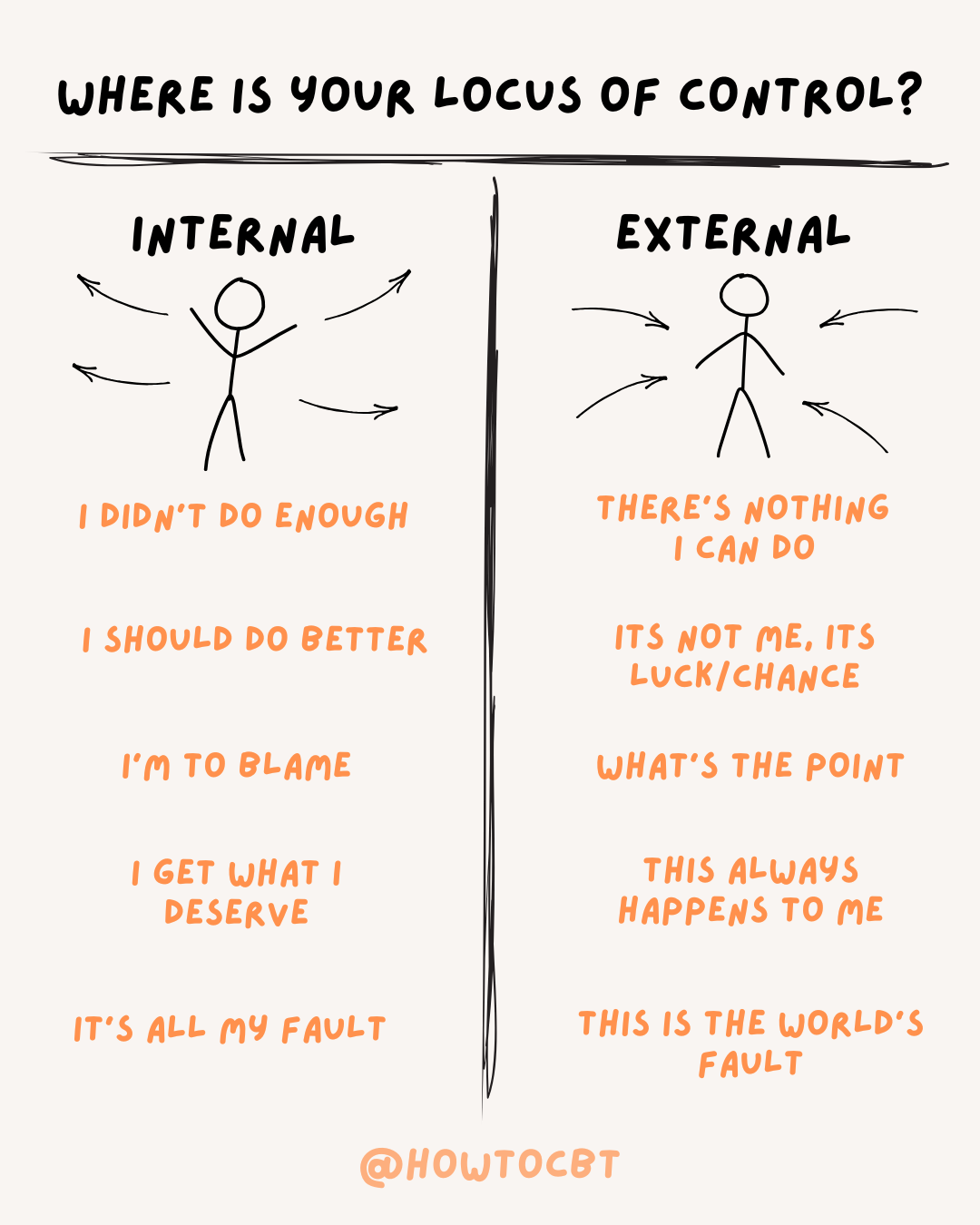
In CBT, we often explore where you believe control lies in your life. Inside you or outside you. That’s called your locus of control.
🔸 INTERNAL LOCUS OF CONTROL
You believe YOUR actions & choices shape your outcomes.
“I didn’t pass because I didn’t revise enough. I can change that next time.”
(Often linked with empowerment & problem-solving).
🔸 EXTERNAL LOCUS OF CONTROL
You believe things happen to you, NOT because of you.
“I failed because the teacher hates me.”
(Often linked with helplessness, anxiety, or low motivation).
Therapy helps you:
* Notice when you’ve given up control to OUTSIDE FORCES.
* Recognise what IS within your influence.
* Build a more balanced mindset:
“I CAN’T control what happens, but I CAN control how I respond.”
EXAMPLE
A client with anxiety might say, “I can’t cope when people judge me.”
CBT reframes this as:
“I can’t control others’ opinions, but I can manage how I respond to my thoughts about them.”
The goal
Shift from powerless to purposeful. Recognising that control isn’t ALL-OR-NOTHING.
1️⃣ Identify your beliefs about control (“I can’t change how I feel”; “Other people make me anxious”).
2️⃣ Challenge the thinking that exaggerates external control or minimises internal control.
3️⃣ Shift toward a more balanced, sense of control. Recognising what is within one’s influence & what isn’t.
Some things are out of your hands. But your thoughts, actions, & responses are ALWAYS within reach.
#CBT #LocusOfControl #TherapyTools #MentalHealthEducation #PsychologyPost